Stable Diffusion – Open-Source AI for Advanced Image Generation

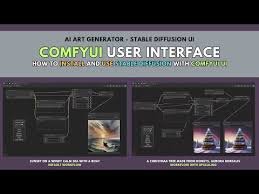
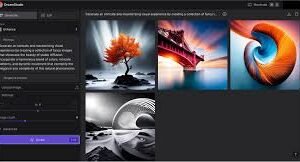
Stable Diffusion is a powerful open-source AI model designed for generating high-quality images from text prompts. It empowers developers, designers, and data analysts to create stunning visuals, experiment with creative ideas, and build innovative applications.

Quick Facts - About Stable Diffusion

Category Open-source diffusion, AI Image Generation
Pricing Free / Freemium
Platform Desktop (Windows, macOS, Linux), Web-based (via hosted services), API
Main Features Text-to-Image, Image-to-Image, Inpainting/Outpainting, Custom Training, Local Deployment
Best For Developers, Designers, Artists, Data Analysts, Researchers
Language Support English (for prompts), multilingual through community models
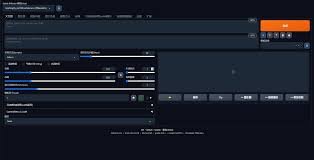
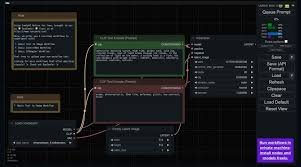
Integrations Python libraries, various UI wrappers (e.g., Automatic1111), custom applications
Deployment Self-hosted, cloud-based, API

What is Stable Diffusion ?

Stable Diffusion is an AI-powered deep learning model primarily used for generating detailed images conditioned on text descriptions. It belongs to the class of diffusion models, which learn to gradually denoise an image from pure noise into a coherent, high-quality visual.

Developed by Stability AI, Stable Diffusion is distinguished by its open-source nature, allowing extensive customization, local deployment, and integration into various creative and analytical workflows. It’s a versatile tool for anyone looking to harness generative AI for visual content creation.

Description

  1. Text-to-Image Generation
    • Create realistic or artistic images from simple text descriptions.
    • Offers extensive control over style, composition, and content.
  2. Image-to-Image Transformation
    • Modify existing images by applying new styles or elements based on text prompts.
    • Ideal for artistic stylization, photo editing, and creative variations.
  3. Inpainting and Outpainting
    • Seamlessly fill in missing parts of an image (inpainting).
    • Extend the boundaries of an image with new content (outpainting).
  4. Custom Model Training
    • Fine-tune the model with your own datasets for specialized use cases.
    • Develop personalized AI models tailored to specific artistic styles or themes.
  5. Local Deployment and API Access
    • Run the model on your own hardware for privacy and speed.
    • Integrate its capabilities into custom applications via a flexible API.
  6. Open-Source Ecosystem
    • Benefit from a vast community creating tools, extensions, and resources.
    • Continuously evolving with new features and optimizations from global contributions.

Reviews

There are no reviews yet.

Be the first to review “Stable Diffusion – Open-Source AI for Advanced Image Generation”

Pricing & Plans Of Stable Diffusion

Stable Diffusion, as an open-source model, is fundamentally free to use and deploy on your own hardware. However, various third-party services and platforms offer commercial implementations, enhanced features, or cloud hosting, which may come with their own pricing structures.

  • Free plan: The core Stable Diffusion model and many community-developed interfaces are entirely free for personal and commercial use, requiring only local computing resources.
  • Paid plan: Access to cloud-hosted Stable Diffusion services, premium APIs, or advanced features often requires a subscription or usage-based fees through third-party providers.
  • Enterprise plan: Custom solutions, dedicated support, and higher usage limits are available through various commercial partners and services built on Stable Diffusion.

Pro's

  • Open-source and free to use, fostering innovation and widespread access.
  • Highly customizable and extensible for specific needs and artistic styles.
  • Can be run locally for enhanced privacy and full control over data.
  • Strong community support and extensive resources available for learning and troubleshooting.
  • Generates high-quality, diverse images from text prompts with impressive detail.

Con's

  • Requires significant computing power (GPU) for efficient local deployment.
  • Steep learning curve for advanced customization, fine-tuning, and prompt engineering.
  • Can sometimes produce unintended or biased content without careful prompting.
  • Output quality varies greatly depending on prompt crafting, model version, and configuration.

Popular Use Cases of Stable Diffusion

  • Personal artistic expression and creative exploration for hobbyists.
  • Graphic design and marketing material generation for businesses.
  • Game development for assets, textures, and concept art.
  • Academic research in AI, computer vision, and generative models.
  • Prototyping and visual ideation for products and architectural designs.

Alternatives of Stable Diffusion

Tool Best For How It Compares
Midjourney High-quality artistic and aesthetic image generation More curated and user-friendly for artistic styles, but proprietary and subscription-based.
DALL-E 3 (via ChatGPT Plus/Copilot) Easy, integrated text-to-image within conversational AI Simpler to use, direct integration with language models, but less customization and local control.
Leonardo.ai Game assets, cinematic art, and user-friendly creative tools Offers a more managed platform with specialized features for artists, often freemium with cloud processing.

Feedback

From Reddit:
“The versatility of Stable Diffusion is incredible. Being able to run it locally and customize models has revolutionized my workflow for concept art.”

From X (formerly Twitter):
“Stable Diffusion’s open-source nature means endless possibilities. The community models are mind-blowing, constantly pushing what’s achievable.”

FAQs related to Stable Diffusion

  1. Is Stable Diffusion completely free to use?
    Yes, the core Stable Diffusion model and many community interfaces are free, though commercial services built on it may charge.
  2. What kind of hardware do I need to run Stable Diffusion locally?
    A dedicated GPU (graphics card) with at least 8GB of VRAM is highly recommended for efficient local image generation.
  3. Can I use Stable Diffusion for commercial projects?
    Yes, Stable Diffusion’s license (CreativeML Open RAIL-M License) generally permits commercial use, but always check specific model versions.
  4. How does Stable Diffusion compare to Midjourney or DALL-E?
    Stable Diffusion is open-source and highly customizable, requiring more setup but offering unparalleled control, unlike proprietary services like Midjourney or DALL-E.

Unleash Your Creative Potential with AI

Dive into the world of generative AI with Stable Diffusion. Whether you're a developer, designer, or just curious, its powerful capabilities and open-source flexibility make it the perfect tool to bring your wildest visual ideas to life. Start creating breathtaking images and explore the future of creativity today.

Related Tools