Jupyter AI – ai in notebooks that converts natural language to code

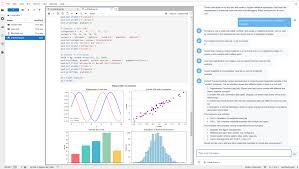
ai in notebooks comes alive with Jupyter AI, turning natural language prompts into runnable Python code. It helps data scientists and educators speed up notebook workflows by turning questions into executable steps.

Category
For AI in Jupyter notebooks

Quick Facts - About Jupyter AI

Category Specialized / Other
Pricing Free (Free to use with paid plans)
Platform Notebook environments
Main Features Natural language to code, Notebook context awareness, Library integration
Best For Data scientists and educators in Jupyter
Language Support Python
Integrations Jupyter and Python libraries
Deployment On-device / BYOM API

What is Jupyter AI ?

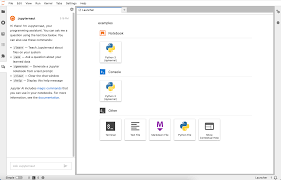
Jupyter AI is an AI-powered tool that helps data scientists turn natural language prompts into executable code inside Jupyter notebooks.
It translates everyday questions into ready-to-run code blocks that load data, run analyses, and visualize results, benefiting researchers, students, and instructors who work entirely within notebooks.

Description

1. Natural Language to Code Translation

  • Translates plain language prompts into runnable Python code that works inside Jupyter notebooks.
  • Generates boilerplate and library calls for common data tasks.

2. Notebook Context Awareness

  • Remembers surrounding variables and data structures to produce coherent code blocks.
  • Adapts generated code to the current notebook state to minimize errors.

3. Library Integration and Snippet Reuse

  • Emits code that aligns with installed libraries in the environment.
  • Reuses data loading and cleaning snippets to speed up analysis.

4. BYOM API and Local Use

  • Supports Bring-Your-Own-Model or API usage with costs only for the BYOM API.
  • Lets you keep data and compute in your environment if desired.

5. Free to Use with Paid Plans

  • Free tier covers core NL-to-code features for basic notebooks.
  • Paid plans unlock higher limits and advanced prompts.

6. Data Science Workflow Focus

  • Optimizes code generation for data cleaning, visualization, modeling tasks.
  • Helps maintain reproducible steps within a single notebook session.
Reviews

There are no reviews yet.

Be the first to review “Jupyter AI – ai in notebooks that converts natural language to code”

Pricing & Plans Of Jupyter AI

Pricing plans are based on a freemium model with BYOM API costs only.

  • Free: Free – Basic access with core features.
  • Starter: Contact for pricing – For individuals who need extra compute and more prompts per day.
  • Pro: Contact for pricing – For small teams needing collaborative features.
  • Business: Contact for pricing – For cross-team workflows and governance.
  • Enterprise: Contact for pricing – For large organizations with compliance needs.
  • Team: Contact for pricing – For teams needing shared workspaces.

Pro's

  • Code generation from natural language speeds up notebook work without leaving the interface.
  • Strong focus on data science workflows with pandas, numpy, and visualization libraries.
  • Free tier lets you test core NL-to-code features before upgrading.
  • BYOM API usage is billed only when you use that option.

Con's

  • Quality depends on prompt clarity; may require manual tweaks.
  • Limited support for some advanced libraries or custom environments.
  • May require online or local compute for heavier models depending on setup.

Popular Use Cases of Jupyter AI

  • Generate pandas data cleaning code from a NL prompt that describes a dataset and desired cleaning steps.
  • Create a quick visualization by describing the chart you want and the data columns to use.
  • Prototype a simple ML pipeline inside a notebook by describing features and targets in natural language.
  • Demonstrate data science steps in class by issuing NL prompts to build and explain analyses.

Alternatives of Jupyter AI

Tool Best For How It Compares
GitHub Copilot General code generation in notebooks and editors Broad language support and IDE integration, but not notebook-specific NL-to-code in a single tool.
Kite Python code completion in notebooks Focused on code completion; lacks NL-to-code translation fidelity in notebooks.
Tabnine AI code completion across notebooks Solid completion and NL prompts but may not be notebook-first.

Feedback

Representative user feedback:
“Saves time turning plain language into runnable notebook code without heavy setup.”

Representative user feedback:
“Great for quick prototyping, but occasional prompts still need manual refinement.”

FAQs related to Jupyter AI

  1. What is Jupyter AI?
    Jupyter AI is an AI-powered tool that turns natural language prompts into executable code inside Jupyter notebooks.
  2. How does it work with notebooks?
    It analyzes NL prompts and outputs Python code blocks you can run directly in your notebook.
  3. Is it free to use?
    Yes, a Free tier is available, with paid plans offering higher limits and BYOM options.
  4. Can I use BYOM API with Jupyter AI?
    Yes, BYOM API usage is available and billed separately based on usage.

Start coding with natural language now

Try Jupyter AI today to see how a simple prompt can generate Python code directly in your notebook. You’ll reduce repetitive typing, speed up data cleaning and visualization, and stay in your familiar Jupyter environment.

Related Tools